
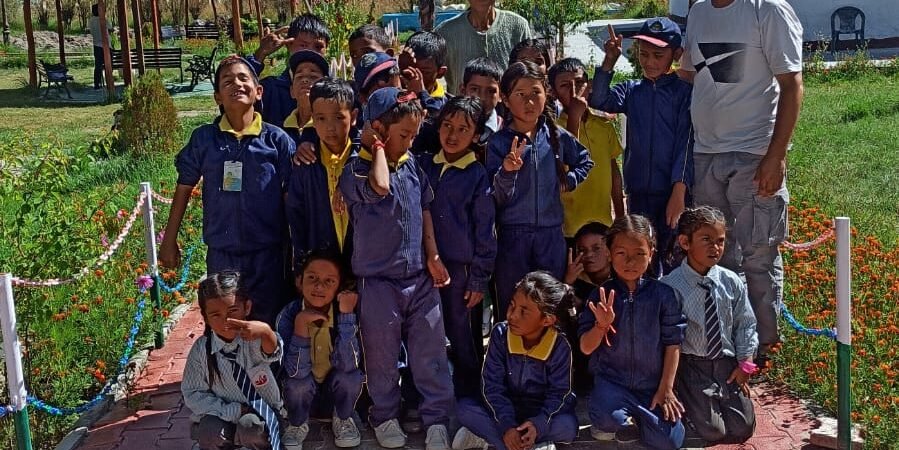
The event at Govt High School, Shey was not limited to academic achievements and institutional development. It also provided a vibrant platform for students to celebrate their cultural identity, demonstrate their creativity and highlight their growing sense of social responsibility.
A major attraction of the programme was the presentation of multi-genre cultural performances by the students themselves. Through music, theatre and other creative expressions, the students brought elements of Ladakhi heritage to the forefront, demonstrating how education can provide a space where local culture and modern learning complement each other.
The school choir presented performances reflecting the cultural traditions and artistic heritage of Ladakh. Local theatre groups also contributed to the programme with performances rooted in regional themes. Together, these presentations created an atmosphere in which students were able to connect classroom learning with the history, traditions and cultural expressions of their community.
Preserving Indigenous Heritage
The emphasis on Ladakhi culture is particularly relevant to the objectives of the PM SHRI initiative, which places importance on experiential learning, indigenous knowledge, local traditions and the preservation of India’s diverse cultural heritage.
For students, participation in cultural activities offers learning opportunities that extend beyond textbooks. Preparing a traditional song, staging a theatre performance or presenting aspects of local heritage requires research, teamwork, communication and creativity. It also encourages young people to understand and appreciate the cultural environment in which they live.
In a rapidly changing world, such initiatives can help ensure that modernization does not come at the expense of cultural identity. Schools can serve as important spaces where traditional knowledge is documented, discussed and passed on to younger generations in ways that are relevant to contemporary students.
At Shey, the cultural presentations demonstrated that local heritage can become an integral part of the educational experience rather than remaining separate from academic life.
Students Taking the Lead
Another significant feature of the event was the active involvement of student leadership.
Students led an awareness drive highlighting their participation in public-awareness and community-oriented campaigns. Their involvement reflected a growing understanding that education is also about developing responsible and engaged citizens.
The students’ participation in regional Viksit Bharat outreach initiatives further demonstrated their willingness to connect school activities with wider national development themes. Such engagement provides students with opportunities to understand public campaigns, communicate ideas and participate constructively in activities beyond the classroom.
Giving students leadership responsibilities also helps build confidence and organisational skills. Planning an awareness activity, coordinating with fellow students, preparing presentations and communicating messages to the wider community all provide practical experiences that cannot be gained through conventional classroom instruction alone.
Connecting School and Community
The cultural programme also strengthened the relationship between the school and the wider community.
Schools in regions such as Ladakh occupy an important position in preserving local identity while preparing young people for the future. Community participation in school events can create opportunities for students to learn directly from local cultural practitioners, elders and community members.
This interaction helps establish the school as more than an educational institution. It becomes a community space for cultural exchange, civic awareness and collective learning.
The participation of local theatre groups alongside student performers was particularly valuable in this regard. It created a bridge between established community traditions and the younger generation, allowing students to experience local artistic forms while also contributing their own interpretations.
Learning Through Participation
The cultural and awareness activities at Shey illustrate an important principle of contemporary education: students learn effectively when they are given opportunities to participate, create and take responsibility.
Whether performing with the school choir, taking part in theatre, organising an awareness campaign or contributing to a public outreach initiative, students are developing skills in communication, collaboration, leadership and creative expression.
These experiences can complement academic learning and contribute to the development of well-rounded individuals.
The programme therefore reflected a broader educational philosophy in which culture, creativity, citizenship and academic learning are interconnected. It showed how a school can simultaneously preserve its local heritage and encourage students to engage with larger national and social themes.
A Living Expression of Ladakhi Identity
The cultural presentations at Govt High School, Shey ultimately served as a reminder that education is closely connected with identity and community.
By placing Ladakhi heritage at the centre of student performances and combining cultural expression with civic-awareness activities, the school demonstrated how young people can remain connected to their roots while developing the confidence and skills needed to participate in a changing society.
As Govt High School, Shey takes on its wider role as a PM SHRI mentor institution, such activities can become an important part of the experience it shares with neighbouring schools. Its example demonstrates that educational excellence is not confined to smart classrooms and infrastructure; it also involves preserving culture, encouraging creativity, developing leadership and building stronger connections between schools and communities.
The event thus offered a compelling picture of students not merely as recipients of education, but as young custodians of Ladakhi heritage and active participants in the social and civic life of the region.